tall-taller-tallest、big-bigger-biggest、beautiful-more beautiful-most beautiful、good-better-best。比較変化のルールと文中での使い方を練習します。
英語の比較級・最上級を練習するプリントです。短い語は -er/-est、長い語は more/most、そして good-better-best のような不規則変化があります。変化を書く問題で形を固め、文中の穴うめで than・the・in/of との組み合わせを練習します。
①ふつう:-er/-est(tall, old, fast, long)。②e で終わる:-r/-st(large, nice, wide)。③短母音+子音字:子音字を重ねる(big, hot, sad, thin)。④子音字+y:y→ier/iest(easy, happy, busy, early)。⑤長い語:more/most(beautiful, interesting, popular, famous, difficult, important, useful, expensive)。⑥不規則:good/well→better→best、bad→worse→worst、many/much→more→most、little→less→least。
bigger を biger、easier を easyer、more taller(二重比較)、good→gooder、popular→popularer、the を忘れる、in と of の取りちがえが定番です。
「This book is (interesting) than that one.」→ than があるので比較級。interesting は長い語なので more を使い、答えは more interesting。
練習の合間に、家族の身長や持ち物を比べる文を口で言ってみるのも効果的です。「My father is taller than me.」「This bag is the biggest of the three.」のように、身近なものに置きかえると、形のルールが文の中で使える知識になります。
まちがいは「つづりのミス」か「比較級か最上級かの判断ミス」かを分けて、どちらが多いかを見てください。判断ミスが多いときは、文中の than や the に印をつけてから答える習慣をつけ、「別の問題にする」でもう一度取り組みます。
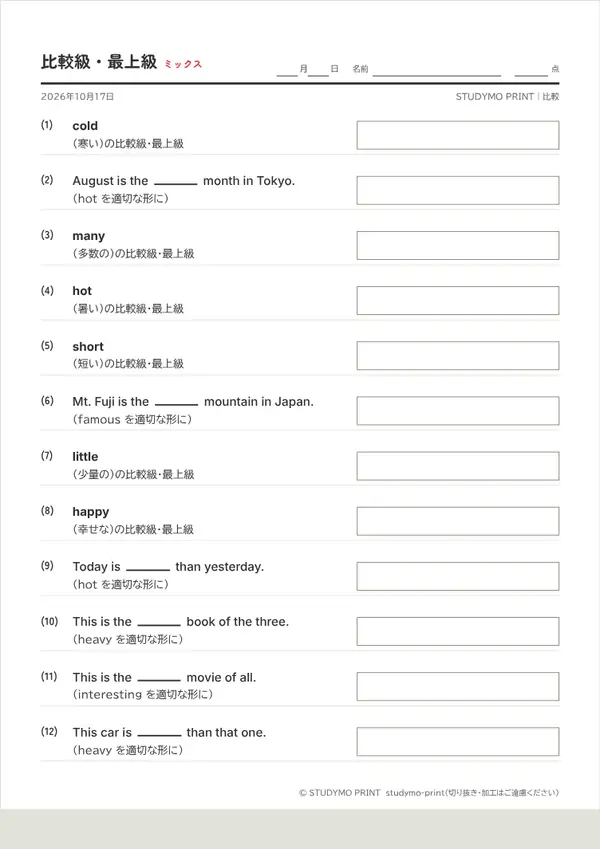
比較級・最上級メーカーでは、次のような問題が作られます。
beautiful・interesting・popular・difficult・important など、つづりの長い語(おもに3音節以上・一部の2音節)です。-ful・-ous・-ing・-ive で終わる語も more/most になります。
「いちばん〜」は1つに決まるので the をつけます(the tallest)。副詞の最上級は the を省略することもあります。
場所・集団(in my class, in Japan)は in、複数のもの・数(of the three, of all)は of を使います。
